Explore Boston
History, culture and things to do in Boston
Few American cities carry their past as openly as Boston. Colonial meeting houses stand beside glass towers, a seventeenth-century common still anchors downtown, and a harbor that once launched clipper ships now frames waterfront promenades. For anyone weighing the things to do in Boston, or considering a home here, the city rewards slow attention: a walk through Beacon Hill at dusk, an afternoon in a Venetian-style museum courtyard, an evening concert in one of the world's acoustically celebrated halls. This guide follows Boston from its founding to the neighborhoods that define it today.
How Boston Was Formed
The Shawmut Peninsula
Before European settlement, the land that became Boston was a small, hilly peninsula the Massachusett people called Shawmut, connected to the mainland by a narrow neck of land and surrounded by tidal flats and marsh. Indigenous communities fished, gathered shellfish and moved seasonally across the region for thousands of years before the arrival of colonists, and epidemics in the late 1610s had already devastated many coastal communities by the time English ships arrived.
Plymouth, Winthrop and the founding of 1630
In 1620 the Pilgrims aboard the Mayflower landed at Plymouth, about forty miles to the south, establishing Plymouth Colony. A decade later a much larger Puritan migration organized as the Massachusetts Bay Company arrived under Governor John Winthrop. After a brief stay in Charlestown, the settlers crossed to Shawmut in 1630, drawn by its fresh springs, and named their town Boston after the Lincolnshire town many had come from. Winthrop's vision of a "city upon a hill" shaped the settlement's sense of itself, and in 1634 the town set aside the land that remains Boston Common.
The road to Revolution
By the eighteenth century Boston was a prosperous port and the political heart of British North America's resistance to imperial taxation. On March 5, 1770, British soldiers fired into a crowd on King Street, killing five people in what became known as the Boston Massacre. On December 16, 1773, colonists protesting the Tea Act boarded three ships at Griffin's Wharf and dumped 342 chests of tea into the harbor. Parliament answered by closing the port. On the night of April 18, 1775, Paul Revere and William Dawes rode out to warn that British troops were marching toward Lexington and Concord, where fighting began the next morning. The Battle of Bunker Hill followed that June in Charlestown, and in March 1776 the British evacuated Boston after Continental forces fortified Dorchester Heights.
Today the Freedom Trail, a 2.5-mile line of red brick and paint, links sixteen sites from that era, among them Boston Common, the Massachusetts State House, Old South Meeting House, the Old State House, Faneuil Hall, the Paul Revere House, the Old North Church, USS Constitution and the Bunker Hill Monument.
Ships, trade and a city built on fill
After independence, Boston merchants built fortunes in the China trade, shipping and textiles, and the city was incorporated in 1822. Its geography changed dramatically: hills were cut down and their soil used to fill coves and flats, and beginning in 1857 the great tidal basin of the Back Bay was filled over several decades with gravel carried by rail, creating the planned grid of Commonwealth Avenue and its row houses. Annexations of Roxbury, Dorchester, Charlestown, Brighton and West Roxbury, among others, expanded the city across the nineteenth century, and Hyde Park joined in 1912.
A capital of learning and medicine
Boston's intellectual life has deep roots: Boston Latin School opened in 1635, and Harvard College was founded across the river in Cambridge in 1636. Massachusetts General Hospital opened in 1821, and in 1846 it hosted the first public demonstration of surgical anesthesia. In the twentieth century the concentration of universities, teaching hospitals and research laboratories made the region one of the world's leading centers of education, medicine and life sciences, a role that shapes the city's economy to this day.
Museums, music and the stage
Museum of Fine Arts, Boston. Founded in 1870 and housed on Huntington Avenue since 1909, the MFA holds an encyclopedic collection spanning ancient Egypt, Asian art, European painting and the art of the Americas, including a significant body of work by John Singer Sargent.
Isabella Stewart Gardner Museum. Opened in 1903 in a building modeled on a Venetian palazzo, the museum presents Gardner's collection of paintings, sculpture and decorative arts as she arranged it around a flowering interior courtyard. Its empty frames recall the unsolved 1990 theft of thirteen works.
Institute of Contemporary Art. Since 2006 the ICA has occupied a cantilevered building on the Seaport waterfront, presenting contemporary visual art, performance and film.
Boston Symphony Orchestra. Founded in 1881, the BSO performs at Symphony Hall, opened in 1900 and designed with input from physicist Wallace Clement Sabine. The Boston Pops, its lighter counterpart, is known for its Fourth of July concert on the Esplanade.
The Theater District. Along Tremont and Washington Streets, restored early-twentieth-century venues such as the Boch Center Wang Theatre, the Citizens Bank Opera House and the Emerson Colonial Theatre host touring productions, dance and opera.
Boston restaurants and culture
The North End remains the city's best-known food neighborhood, shaped by Italian immigration in the late nineteenth and early twentieth centuries. Bakeries, salumerias, cafes and family-run trattorias line Hanover and Salem Streets, and summer feasts honoring patron saints still fill the streets with processions.
Faneuil Hall, a market and meeting hall since 1742, and the granite Quincy Market building of 1826 form a lively marketplace near the waterfront. New England traditions are well represented throughout the city: oysters from Massachusetts waters, clam chowder, lobster rolls and baked beans.
Beyond these landmarks, the South End is known for chef-driven bistros and weekend brunch along Tremont Street; Back Bay offers formal dining rooms, hotel restaurants and sidewalk cafes on Newbury Street; and the Seaport concentrates seafood houses, rooftop terraces and waterfront dining.
Boston after dark
Evenings in the Seaport center on waterfront terraces and hotel lounges overlooking the harbor, while Back Bay's evening life runs from cocktail bars on Boylston Street to quiet wine rooms on side streets. The Theater District fills before curtain time, and Symphony Hall and Jordan Hall draw audiences for classical performance.
The city's Irish heritage survives in historic pubs, some in buildings dating to the eighteenth century, and live music ranges from jazz clubs to performance halls in the Fenway area. On game nights the streets around Fenway Park, home of the Red Sox since 1912, and TD Garden take on their own energy.
A city of institutions
Boston and its neighbors host one of the densest concentrations of higher education in the world. Harvard University and the Massachusetts Institute of Technology sit across the Charles River in Cambridge; Boston University stretches along Commonwealth Avenue; Northeastern University anchors the Fenway area; and Boston College lies on the city's western edge in Chestnut Hill. Berklee College of Music, Emerson College and Suffolk University add to the academic life downtown.
The Longwood Medical and Academic Area brings together Harvard Medical School, teaching hospitals and research institutions within a few city blocks. Information about public schools is available from the official Boston Public Schools website.
Hospitals and research
Boston's hospitals are major employers and research centers. Massachusetts General Hospital, founded in 1811 and opened in 1821, is located near Beacon Hill. In the Longwood area, Brigham and Women's Hospital, Boston Children's Hospital, Beth Israel Deaconess Medical Center and the Dana-Farber Cancer Institute operate side by side, many affiliated with Harvard Medical School. Boston Medical Center in the South End and Tufts Medical Center near Chinatown complete the city's network of academic medical centers.
What drives the city
Education and healthcare are among Boston's largest employers, and their research has fostered a substantial biotechnology and life-sciences sector in the Seaport, the Longwood area and neighboring Cambridge. Financial services, including asset management and insurance, have a long history in the Financial District, and technology firms and start-ups have grown alongside the universities. Tourism, conventions and port activity add to the mix.
Transit, rail and air
The MBTA, known locally as the T, runs the Red, Orange, Blue and Green subway lines, the Silver Line bus rapid transit, an extensive bus network, commuter rail and harbor ferries. The Tremont Street Subway, opened in 1897, was the first subway in the United States.
South Station serves commuter rail lines to the south and west along with Amtrak service to New York and beyond; North Station, beneath TD Garden, serves northern commuter lines and the Amtrak Downeaster to Maine. Logan International Airport in East Boston is reachable by the Blue Line, the Silver Line and the harbor tunnels. Schedules and maps are available from the official MBTA website.
Green space and harbor
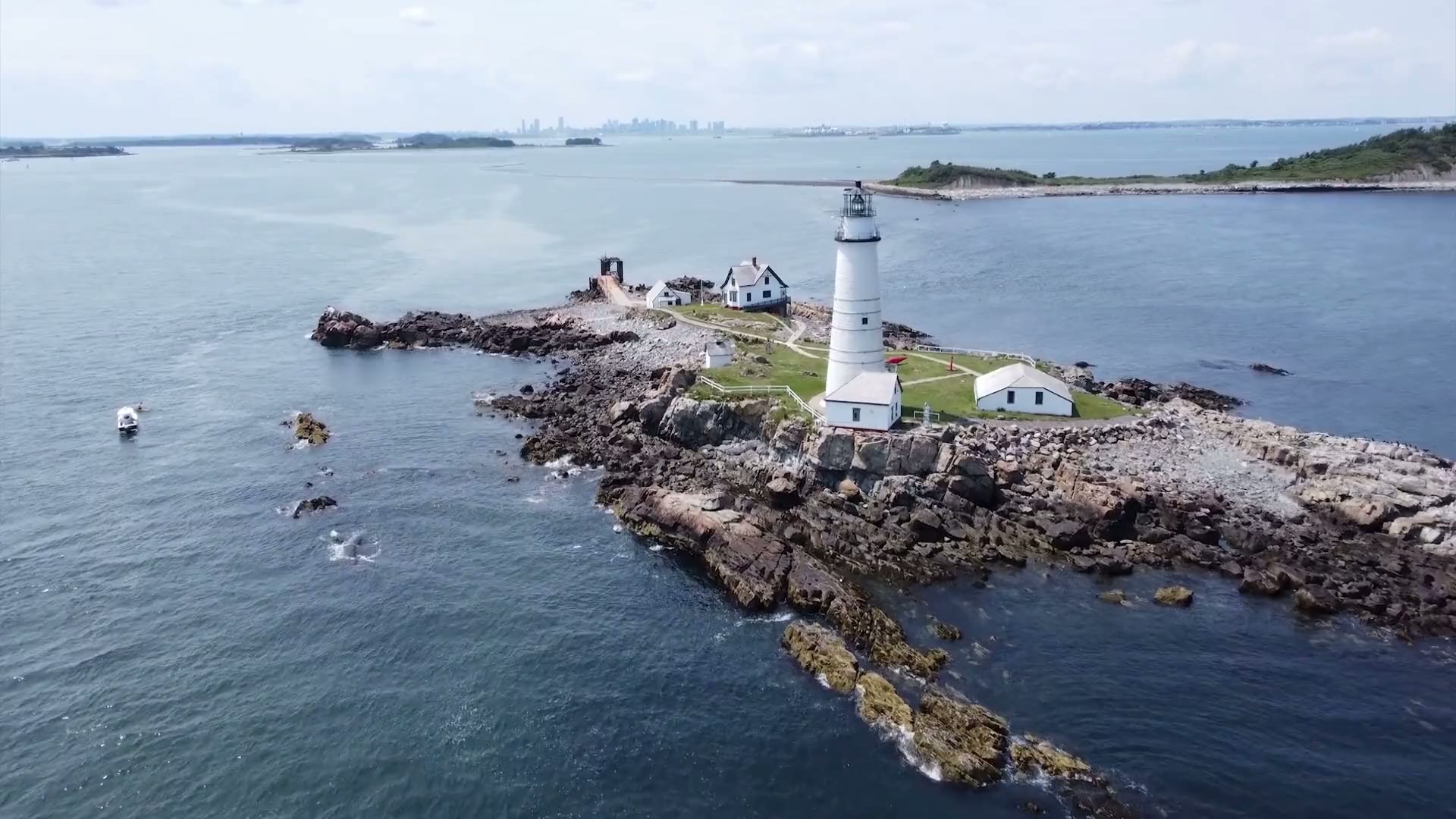
Boston Common, set aside in 1634, is among the oldest public parks in the United States. Beside it, the Public Garden, established in 1837 as the country's first public botanical garden, is known for its lagoon and seasonal Swan Boats.
The Emerald Necklace, designed by Frederick Law Olmsted, links parks and parkways from the Back Bay Fens through the Riverway, Olmsted Park, Jamaica Pond and the Arnold Arboretum to Franklin Park. The Charles River Esplanade stretches along the Boston bank of the river with paths, docks and the Hatch Shell, and the Harborwalk follows the waterfront through Charlestown, downtown, the Seaport and beyond. Seasonal hours and access vary; check with the Boston Parks and Recreation Department and the Department of Conservation and Recreation before visiting.
Neighborhoods to explore
- Back Bay
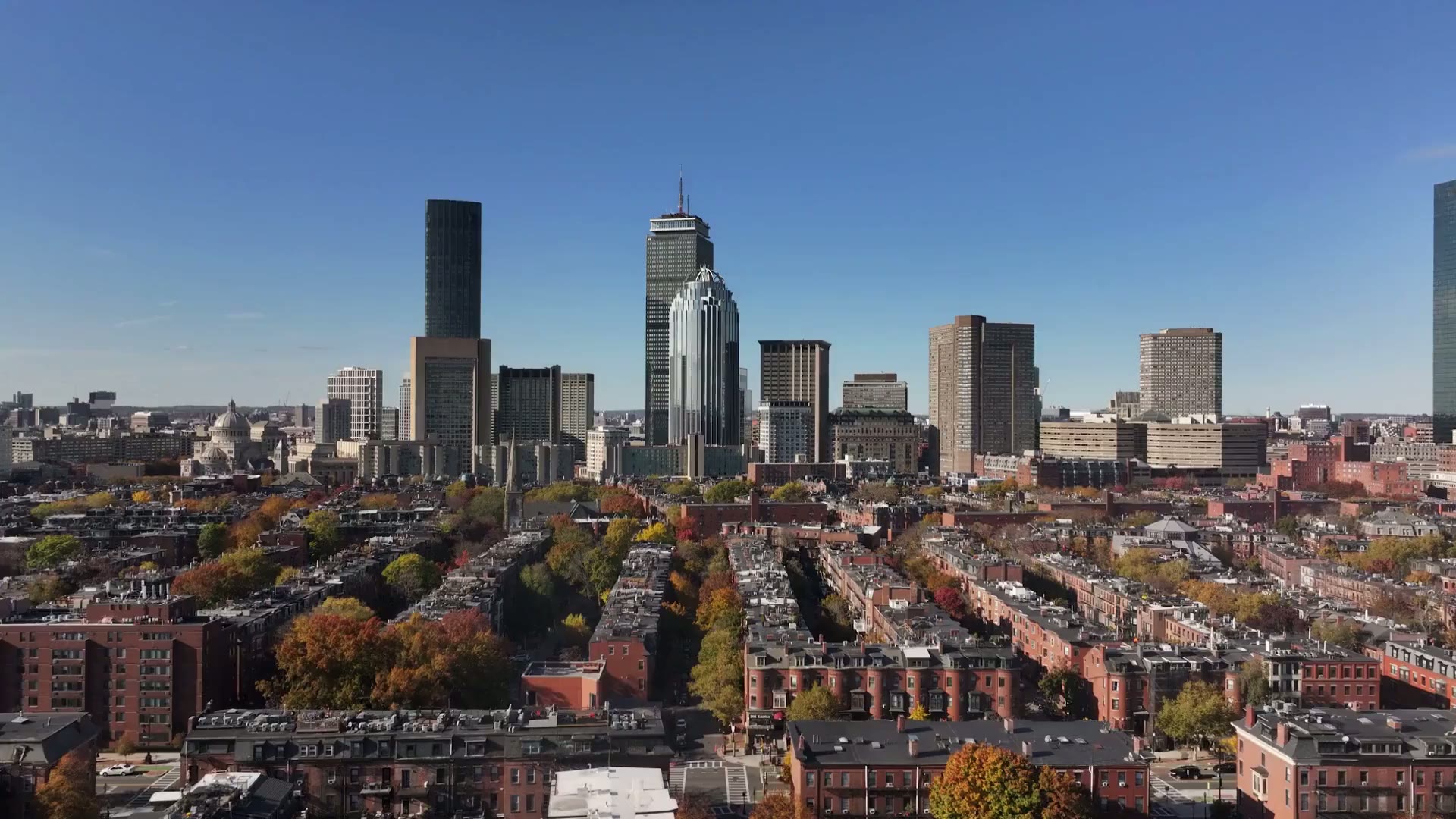
- Built on filled tidal flats in the nineteenth century, Back Bay is laid out on a formal grid of brownstone and brick row houses along Commonwealth Avenue's tree-lined mall, with Newbury and Boylston Streets carrying its shops, galleries and dining.
- Beacon Hill
- Narrow streets, brick sidewalks, gas lamps and Federal-style townhouses rise behind the State House. Charles Street serves as the neighborhood's village main street, and Louisburg Square remains a well-known residential square.
- South End
- One of the largest surviving Victorian row-house districts in the United States, the South End is known for bow-front facades, small residential parks, the SoWa arts district and a dense restaurant corridor along Tremont Street and Washington Street.
- Seaport
- Once working piers and warehouses, the Seaport has become a district of contemporary residential towers, offices, waterfront promenades and the Institute of Contemporary Art, with harbor views at nearly every turn.
- North End
- Boston's oldest residential neighborhood, home to the Paul Revere House and the Old North Church, with compact streets of brick tenements and a long Italian-American culinary tradition along Hanover and Salem Streets.
- Charlestown
- Across the harbor from the North End, Charlestown pairs the Bunker Hill Monument and USS Constitution with streets of Federal and Greek Revival homes and the converted naval buildings of the Navy Yard.
- South Boston
- Bordered by beaches along Day Boulevard and Castle Island, South Boston blends triple-decker streets and new residential buildings near Broadway and West Broadway.
- Jamaica Plain
- Set along the Emerald Necklace, Jamaica Plain is defined by Jamaica Pond, the Arnold Arboretum, Victorian houses and the independent shops of Centre Street.
- Dorchester
- Boston's largest neighborhood, Dorchester holds a wide range of architecture, from Victorian and Queen Anne houses to the triple-deckers characteristic of the city, along with harbor frontage at Savin Hill and Port Norfolk.
- East Boston
- Facing downtown across the inner harbor, East Boston offers waterfront parks such as Piers Park and LoPresti Park, new residential buildings along the water, and direct access to Logan Airport.
Boston homes for sale
A selection of current residences across the city. For monthly prices, sales and days on market, see the Boston Market Insights report.
Loading current Boston residences…
Frequently asked questions
What is the history of Boston?
Boston was founded in 1630 by Puritan settlers led by John Winthrop on the Shawmut Peninsula, land long used by the Massachusett people. The city became a center of resistance before the American Revolution, the site of the Boston Massacre in 1770 and the Boston Tea Party in 1773, and later grew through maritime trade, land reclamation such as the filling of the Back Bay, and its universities and hospitals.
What are the best things to do in Boston for a first visit?
Many visitors begin with the Freedom Trail, a 2.5-mile marked route through sixteen historic sites, then spend time on Boston Common and in the Public Garden, visit the Museum of Fine Arts or the Isabella Stewart Gardner Museum, walk the North End, and follow the Harborwalk along the waterfront.
Which Boston neighborhoods are worth exploring?
Back Bay, Beacon Hill, the South End, the North End, Charlestown, the Seaport, South Boston, Jamaica Plain, Dorchester and East Boston each have a distinct architectural character, from gas-lit brick lanes to Victorian bow-front rows and contemporary waterfront towers.
How do you get around Boston?
The MBTA operates subway lines, buses, commuter rail from South Station and North Station, and harbor ferries. Logan International Airport is in East Boston and is connected to the city by the Blue Line, the Silver Line and road tunnels. Much of central Boston is also walkable.
Where can I see current homes for sale in Boston?
Current Boston listings from MLS PIN are shown on this page and in the SZ INC. Realty property search, and monthly statistics are published on the Boston Market Insights page.
Discover Boston with SZ INC. Realty
Whether you are visiting, relocating or acquiring a residence, our advisors offer a private introduction to the city.